
Is Sourdough Bread Gluten-Free? (The Real Answer)
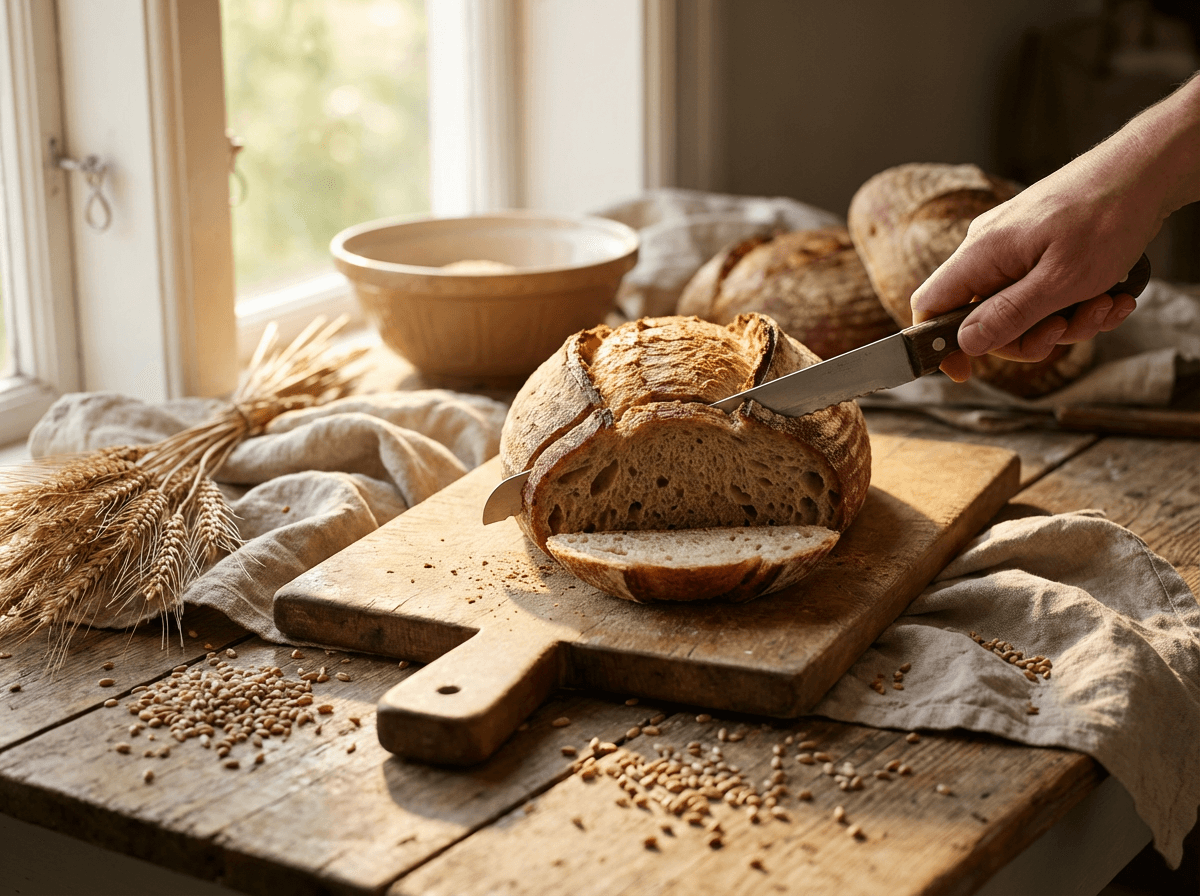
Short answer: no. Sourdough bread made with wheat, rye, spelt, or barley flour contains gluten. Fermentation reduces some of it, but not enough to call it gluten-free -- and definitely not enough to make it safe for people with celiac disease.
Sourdough is not gluten-free
This needs to be stated plainly because there's a lot of confusing information online. Standard sourdough bread is made with wheat flour (or rye, or spelt -- all gluten-containing grains). It contains gluten. Fermentation does not remove it.
Yes, lactic acid bacteria break down some gluten proteins during fermentation. Studies have measured reductions in gluten content, sometimes significant ones. But "reduced" and "free" are different things. Even after a 48-hour fermentation, wheat sourdough still contains enough gluten to cause serious harm to someone with celiac disease.
The legal threshold for a "gluten-free" label in most countries is 20 parts per million (ppm). Standard sourdough bread contains thousands of ppm. It's not close.
How fermentation affects gluten
Here's what actually happens to gluten during sourdough fermentation, because the science is genuinely interesting even though the practical conclusion is clear.
Gluten is made up of two protein families: glutenin and gliadin. When you add water to flour, these proteins link together to form the stretchy network that gives bread its structure. During sourdough fermentation, two things attack that network.
First, the protease enzyme (activated when flour meets water) breaks down protein bonds. Second, lactic acid bacteria produce their own proteolytic enzymes that further degrade gluten proteins. Together, these processes can reduce measurable gluten by 50-80% depending on fermentation time, temperature, and the specific bacterial strains involved.
This is meaningful. It's part of why many people find sourdough easier to digest. But even at 80% reduction, you're still looking at gluten levels far above the safe threshold for celiacs. A typical wheat flour starts with around 80,000-120,000 ppm of gluten. Reduce that by 80% and you're still at 16,000-24,000 ppm. The safe limit is 20.
Celiac disease vs. gluten sensitivity: different situations
Celiac disease is an autoimmune condition. When someone with celiac eats gluten, their immune system attacks the lining of their small intestine. This causes real, measurable damage -- villous atrophy, nutrient malabsorption, and increased risk of other serious conditions. Even small amounts of gluten trigger this response. There is no safe amount of standard sourdough for celiacs.
Non-celiac gluten sensitivity (NCGS) is different. It's not autoimmune, it doesn't cause intestinal damage, and the threshold for symptoms varies enormously between individuals. Some people with NCGS can eat sourdough without issues. Others can't. The reduced gluten content may be enough to keep symptoms at bay for some people, but there's no guarantee.
If you suspect you have a problem with gluten, get tested for celiac disease before experimenting with sourdough. The blood test is simple, and knowing whether you have celiac versus sensitivity changes the risk calculation entirely.
Gluten-free sourdough is a real option
You can absolutely make sourdough with gluten-free flours. Rice flour, buckwheat flour, sorghum flour, teff flour, and others all work. The wild yeast and bacteria don't care about gluten -- they're after the starches and sugars.
The texture will be different. Without gluten, you won't get the same chewy crumb or dramatic oven spring. The bread tends to be denser and more crumbly. But the sour flavor, the extended shelf life, and the digestibility benefits of fermentation are all still present.
A few tips if you go this route: buckwheat and brown rice flour make excellent gluten-free starters. You can boost the structure with psyllium husk or xanthan gum. And set your expectations accordingly -- gluten-free sourdough is its own thing, not a sad imitation of wheat sourdough. Some varieties, like teff sourdough injera, have been staple foods in their cultures for centuries.
Starting a gluten-free sourdough starter follows the exact same process as a wheat starter: mix flour and water, feed daily, wait for signs of fermentation. It typically takes the same amount of time to mature.