
How Sourdough Fermentation Works (The Science Made Simple)
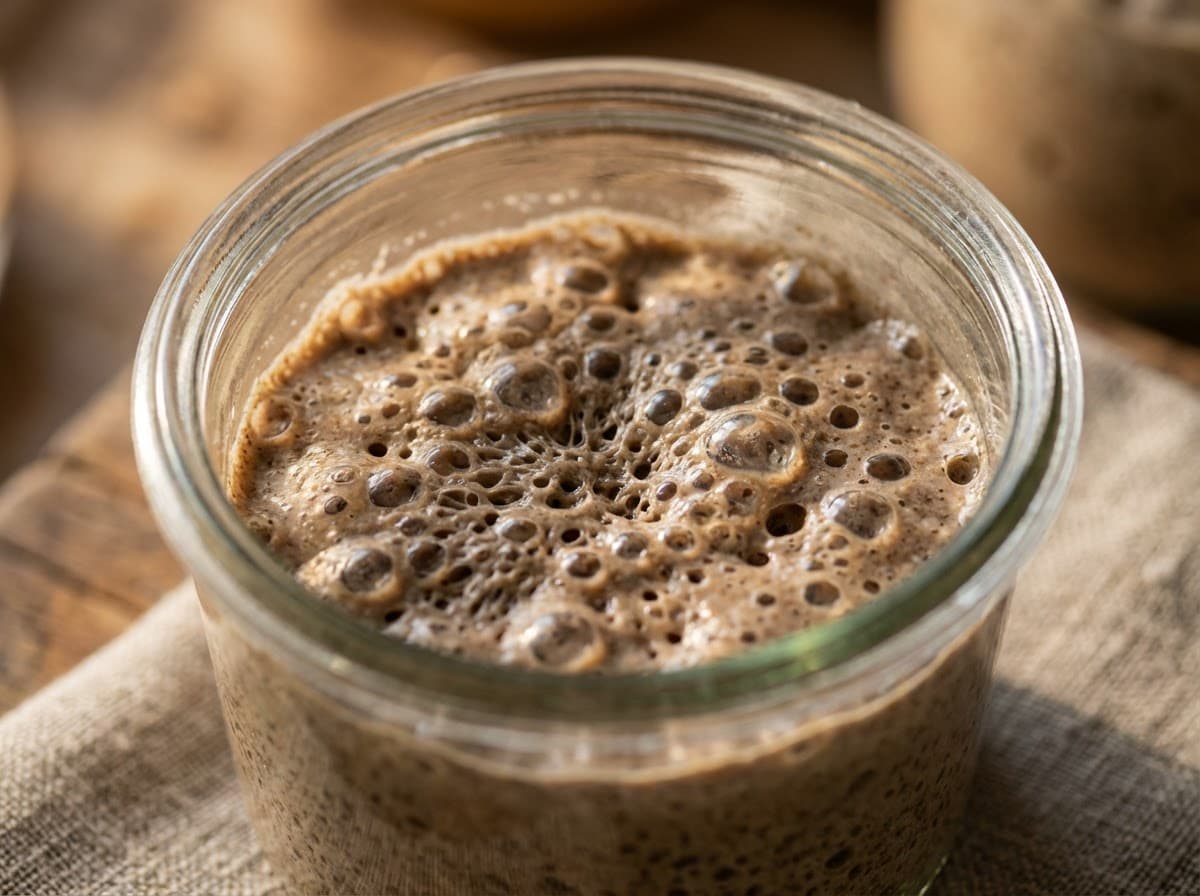
Every loaf of sourdough bread is the product of a microscopic ecosystem doing its thing. Wild yeast, bacteria, and enzymes all working together (and sometimes competing) to turn flour and water into something extraordinary. Here's what's actually happening inside your dough.
Wild yeast vs. commercial yeast
Commercial yeast -- the stuff in those little packets -- is a single strain of *Saccharomyces cerevisiae*, bred and cultivated for one job: producing carbon dioxide fast. It's the sprinter of the yeast world. Add it to dough, and you'll get a risen loaf in a couple of hours.
Wild yeast in sourdough is a different animal. Your starter contains multiple yeast species, each adapted to the specific environment of your flour and kitchen. They work slower than commercial yeast, but they produce a wider range of flavor compounds along the way -- not just CO2 and ethanol, but esters, aldehydes, and other aromatic molecules.
The wild yeast in sourdough also happens to be more acid-tolerant than commercial yeast. It has to be, because it lives alongside bacteria that are constantly producing organic acids. This tolerance is what allows the sourdough ecosystem to function -- the yeast keeps leavening even as the environment gets increasingly acidic.
Lactic acid bacteria: the flavor makers
Bacteria outnumber yeast in your sourdough by about 100 to 1. They're the dominant organisms, and they're responsible for the flavors that make sourdough taste like sourdough.
There are two main types of lactic acid bacteria (LAB) in sourdough: homofermentative and heterofermentative. Homofermentative LAB produce mainly lactic acid -- the same compound that gives yogurt its tang. Heterofermentative LAB produce lactic acid plus acetic acid (vinegar), ethanol, and even some CO2.
The most famous sourdough bacterium is *Fructilactobacillus sanfranciscensis*, named after San Francisco sourdough. But your starter likely contains a mix of different LAB species, determined by the flour you use and the environment where you bake.
The balance between lactic and acetic acid production determines your bread's flavor profile. More lactic acid gives you a milder, creamier tang. More acetic acid gives you a sharper, more vinegary sourness. You can influence this balance through temperature and hydration -- but more on that in a moment.
The symbiosis (and the competition)
Yeast and bacteria in sourdough have a complicated relationship. They cooperate in some ways and compete in others.
On the cooperation side: yeast produce ethanol as a fermentation byproduct, and some bacteria can metabolize that ethanol into organic acids. Bacteria create an acidic environment that protects the whole ecosystem from pathogenic microorganisms -- and the yeast tolerate that acidity just fine. It's a defensive partnership.
On the competition side: both organisms are eating the same sugars. Some research suggests they produce compounds that inhibit each other's food uptake -- essentially trying to slow each other down. The yeast seem to prefer glucose, while certain bacteria prefer maltose, which reduces direct competition. But the relationship isn't fully understood.
What's clear is that this tension produces better bread. The competition forces both organisms to work harder and produce more complex metabolic byproducts. A pure yeast fermentation is efficient but one-dimensional. A sourdough fermentation is messy, slow, and delicious.
What happens during fermentation
The moment you mix flour and water, enzymes wake up. Amylase starts breaking starch into simple sugars (maltose and glucose). Protease starts breaking down protein bonds. These enzymes exist in the flour because the grain seed needs them to sprout -- but since you've ground the grain into flour, the seed can't sprout. The enzymes still activate, and the yeast and bacteria feast on the results.
The yeast consume sugars and produce CO2 (which leavens your bread) and ethanol. The bacteria consume sugars and produce organic acids (which flavor your bread). Both populations are growing exponentially during the early stages of fermentation.
Meanwhile, the protease enzyme is slowly breaking down gluten bonds, making your dough more extensible. This is why a well-fermented dough is easier for the yeast to inflate -- think of inflating a thin balloon versus a thick rubber tire. The bacteria also contribute to gluten breakdown through their own proteolytic enzymes.
As fermentation progresses, the pH drops from around 6.0 to 4.0 or lower. The environment becomes increasingly hostile to any microorganism that isn't adapted to it. Pathogens die off. This is one reason sourdough is remarkably food-safe -- the acid acts as a natural preservative.
Temperature's role in everything
Temperature is the single biggest lever you have over your fermentation. It affects everything: how fast the yeast reproduce, how fast the bacteria work, which types of acid dominate, and how quickly the enzymes break down your flour.
Warmer temperatures (25-30C / 77-86F) speed up all biological activity. Your dough ferments faster. Bacterial acid production ramps up. The window between "perfectly fermented" and "overfermented" gets shorter.
Cooler temperatures (15-20C / 59-68F) slow everything down. Fermentation takes longer, but the enzymes keep working at roughly the same rate relative to the microbes. This means more enzymatic breakdown per unit of fermentation -- which translates to better flavor development, more sugar creation for crust browning, and a more extensible dough.
There's a common claim that cold fermentation favors acetic acid production (more tang) while warm fermentation favors lactic acid (milder flavor). The evidence for this is mixed -- the author of *The Sourdough Framework* couldn't verify it in his own tests. What's clear is that the yeast and bacteria in your specific starter evolved to work best at whatever temperature you created the starter at. Your microbes are adapted to your kitchen.
pH and acidity: the invisible timer
As bacteria produce acid, the pH of your dough drops. This is actually one of the most reliable ways to track fermentation progress -- more reliable than time, which varies wildly based on temperature, starter activity, and flour composition.
A freshly mixed dough typically starts around pH 5.5-6.0. As fermentation progresses, it drops toward pH 4.0-4.5. At the lower end of that range, the acidity starts to seriously inhibit further fermentation. The bacteria slow down. The yeast become less active. The party winds down.
This self-limiting nature of sourdough fermentation is elegant. The organisms produce byproducts that eventually shut down their own activity. It's why sourdough dough doesn't just ferment indefinitely -- it reaches a natural plateau.
The pH also affects baking. Some acids evaporate during baking, so a bread that tastes very sour as raw dough will taste milder after baking. The longer and hotter you bake, the more acidity evaporates. This gives you one more lever: you can control the final tang of your bread not just through fermentation, but through bake time.