
The History of Sourdough: From Ancient Egypt to Your Kitchen
Sourdough isn't a trend. It's the original bread. For most of human history, all leavened bread was sourdough -- because there was no other way to make bread rise. The story of how we got from there to sliced white bread in plastic bags, and then back again, is worth knowing.
The earliest evidence: older than we thought
The oldest direct evidence of bread-making dates back roughly 14,000 years, to a site called Shubayqa 1 in northeastern Jordan. Archaeologists found charred bread-like remains in a stone fireplace used by Natufian hunter-gatherers. This predates agriculture by several thousand years -- they were grinding wild cereals into flour and baking with it before anyone thought to plant crops.
Were these early breads sourdough? Almost certainly some of them were, at least accidentally. If you mix ground grain with water and leave it sitting in a warm climate, wild yeast and bacteria will colonize it within days. The first sourdough was probably a happy accident -- someone left their grain paste out too long, noticed it had bubbled up, baked it anyway, and discovered it was better.
This accidental discovery was one of those small moments that changed everything. Leavened bread was lighter, tastier, and more digestible than flat, unleavened cakes. Once people figured out that you could save a piece of the bubbly dough to start the next batch, sourdough culture was born -- in both senses of the word.
Egyptian bakers: the first pros
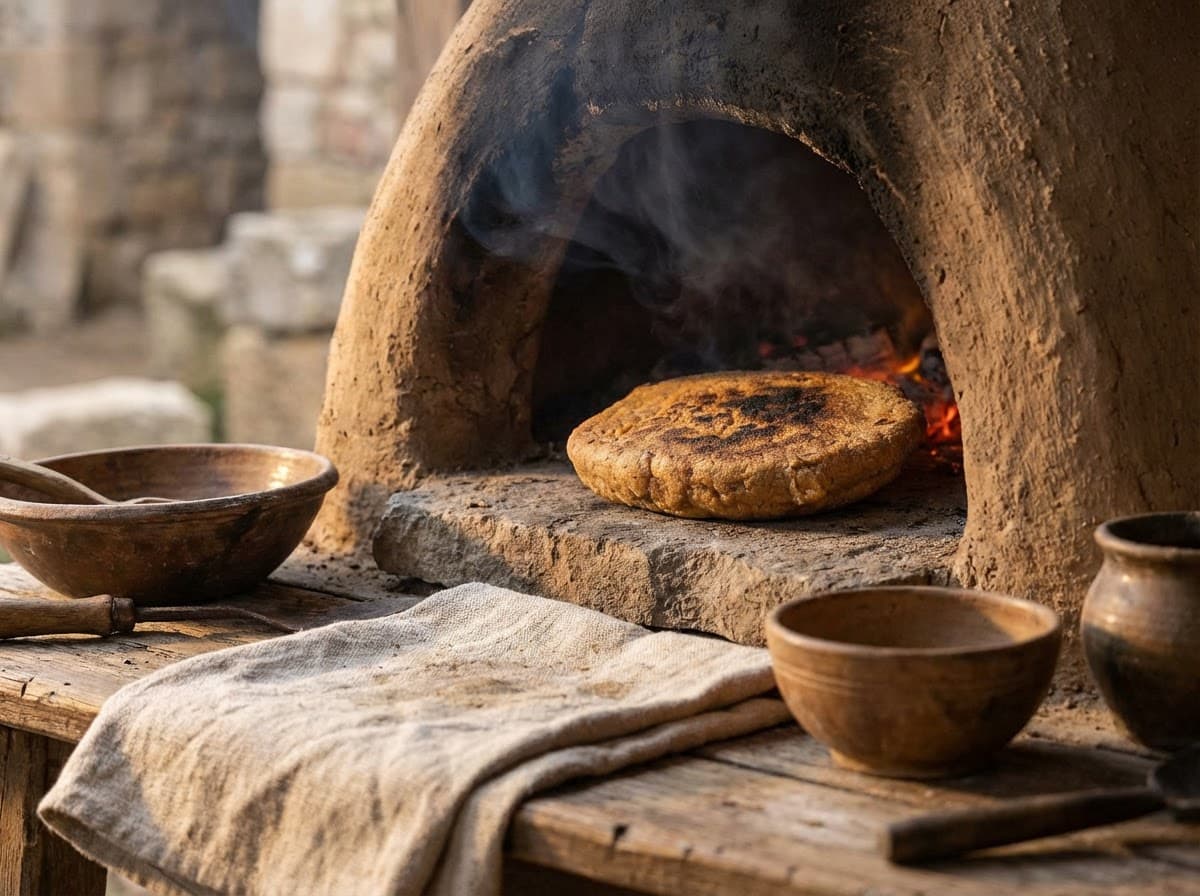
By around 1500 BCE, the ancient Egyptians had turned bread-making into an art form. Tomb paintings and archaeological finds show they produced at least 30 different types of bread. They built dedicated clay ovens (called tannurs) that could reach high temperatures, and they understood that saving a piece of old dough -- what we'd now call a starter -- was essential to making the next batch rise.
The Egyptians didn't understand the microbiology, of course. They didn't know about yeast or bacteria. But they understood the practical mechanics perfectly: keep the culture alive, feed it regularly, and it will leaven your bread reliably.
Bread was so central to Egyptian society that it was used as currency. Workers who built the pyramids were paid in bread and beer -- which, not coincidentally, are both products of yeast fermentation. The Egyptians had figured out that the same living culture that raised their bread could also ferment their grain beverages. Same organisms, different applications.
Rome and the rise of professional bakeries
The Romans inherited bread-making knowledge from the Egyptians and Greeks, and they industrialized it. By 168 BCE, Rome had professional bakeries (*pistrina*) that produced bread at scale. Roman bakers formed guilds, and bread production became so important to social stability that the state eventually subsidized it -- the famous "bread and circuses."
Roman writers like Pliny the Elder documented bread-making practices that are recognizably sourdough. They described using a piece of old dough to leaven new batches, the importance of the starter's vigor, and even the observation that different flours produced different flavors.
The Romans also discovered that the foam from beer brewing could leaven bread, an early precursor to the much later development of commercial yeast. But for daily bread production, sourdough remained the standard method. It was reliable, cost-effective, and required nothing that a baker didn't already have on hand.
The Gold Rush and San Francisco sourdough
Fast forward to 1849. The California Gold Rush brought hundreds of thousands of people to San Francisco, and with them came a distinctive bread tradition.
Miners and settlers needed bread that would last. Sourdough, with its natural preservative acidity, was perfect. Miners carried their starters with them -- reportedly sleeping with their starter pots to keep them warm on cold mountain nights. The term "sourdough" became slang for an experienced prospector, someone who'd been around long enough to have a well-established starter.
San Francisco sourdough developed its own distinctive tang, sharper and more pronounced than European sourdoughs. Scientists eventually identified the responsible bacterium: *Fructilactobacillus sanfranciscensis* (originally *Lactobacillus sanfranciscensis*), named after the city itself. Whether the unique flavor came from the local bacterial strains, San Francisco's cool foggy climate, or some combination of both is still debated.
Boudin Bakery, established in 1849, claims to have been using the same mother starter for over 170 years. Whether that's literally true at a microbial level is questionable, but the tradition is real.
The 20th century: when we forgot how to make bread
The development of commercially produced yeast in the late 1800s changed everything. Compressed yeast (and later instant dried yeast) offered bakers something sourdough couldn't: speed and consistency. A sourdough bread takes 12-24 hours. A yeasted bread can be done in 2-3 hours. For industrial production, the choice was obvious.
The Chorleywood Bread Process, developed in 1961 in England, pushed this further. It used intense mechanical mixing, chemical additives, and large quantities of yeast to produce a loaf of bread in under 3 hours from start to finish. This process now produces about 80% of the bread sold in the UK and is widely used worldwide.
Sourdough nearly disappeared from daily life. By the mid-20th century, it survived mainly in a few traditional bakeries, in San Francisco, and in parts of Europe (particularly Germany, France, and Scandinavia) where bread traditions ran deep enough to resist industrialization.
What we lost wasn't just flavor. We lost the digestibility benefits. We lost the mineral availability. We lost the natural preservation. We replaced a 14,000-year-old process with a 3-hour shortcut, and the bread was worse for it.
The modern revival
Sourdough started coming back in the 1990s and 2000s, driven by artisan bakers who were fed up with industrial bread. But the real explosion happened in 2020, when a global pandemic put millions of people in their kitchens with time on their hands and flour in their pantries.
Sourdough starter became the pandemic's unofficial pet. Social media filled with photos of bubbly starters, crackly crusts, and crumb shots. Flour sold out. Bread bakers formed online communities that grew into the hundreds of thousands. For many people, sourdough baking became a meditation, a hobby, and an identity.
The trend outlasted the lockdowns. Many of the pandemic bakers kept going. Artisan bakeries have multiplied. Even some grocery stores now carry genuine sourdough (though plenty of them still sell fake sourdough -- yeasted bread with added citric acid for tang).
What makes this revival different from a fad is that it's grounded in substance. Sourdough isn't just trendy -- it's genuinely, measurably better bread. The science supports it. The history validates it. And once you've tasted real sourdough, the industrial stuff just doesn't compare.