Every time you feed your sourdough starter, you pull out a lump of old, unfed culture and probably feel guilty about tossing it. Stop doing that.
Sourdough discard is fermented flour with built-in tang and complexity. It won't leaven bread on its own (it's past peak activity), but it adds incredible flavor to anything that uses baking powder, baking soda, or no leavening at all. Keep a discard jar in your fridge, add to it with each feeding, and cook from it all week.
Discard is the portion of sourdough starter you remove before feeding. It's still alive, just past its peak leavening power. The yeast are sluggish, but the bacteria have been busy producing organic acids -- which means your discard is tangier and more flavorful than freshly fed starter.
You can use discard straight from the fridge. You don't need to bring it to room temperature first (though it mixes more easily if you do). You don't need to feed it before using. The whole point is that it's the stuff you'd otherwise throw away.
One thing to know: don't use discard from a starter that's less than two weeks old. Those early feedings can contain undesirable microorganisms that haven't been outcompeted yet. Once your starter is mature and reliably baking good bread, all discard is safe and delicious.
Store discard in a single jar in the fridge, adding new discard on top as you go. It stays good for at least a week, getting tangier over time. If liquid forms on top, that's hooch -- stir it in for extra flavor or pour it off for milder results.
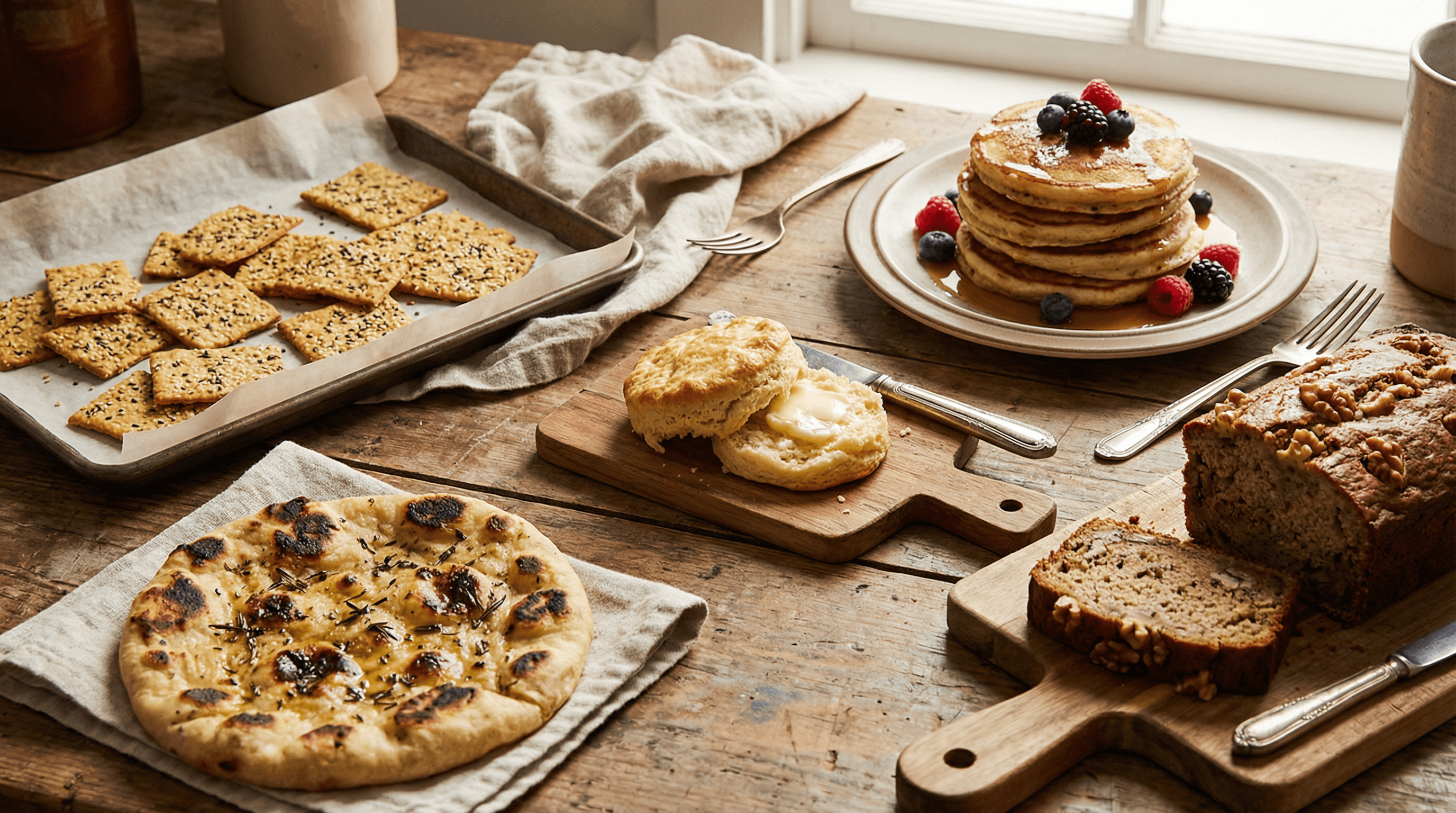
Sourdough discard pancakes: Mix 1 cup discard with 1 egg, 2 tablespoons melted butter, 1 tablespoon sugar, 1/2 teaspoon baking soda, and a pinch of salt. Cook on a buttered griddle. The baking soda reacts with the discard's acidity for extra-fluffy pancakes with a subtle tang. These are better than regular pancakes. That's not an exaggeration.
Sourdough discard crackers: Mix 1 cup discard with 2 tablespoons olive oil, 1 teaspoon salt, and whatever herbs/seeds you like (rosemary and flaky salt is hard to beat). Roll very thin on parchment paper, score into rectangles, and bake at 180C (350F) for 15-20 minutes until crisp and golden. These keep for a week in an airtight container and are dangerously snackable.
Sourdough discard biscuits: Cut cold butter into flour, add discard instead of buttermilk, fold the dough a few times (don't overwork it), cut rounds, and bake hot and fast. The discard's acidity reacts with baking soda the same way buttermilk does, producing tender, flaky biscuits with a subtle sourdough flavor.
Sourdough discard flatbread: Mix discard with just enough flour to make a soft, pliable dough. Divide into balls, roll thin, and cook in a hot, dry skillet for 2-3 minutes per side. Brush with garlic butter. Done.
Sourdough discard banana bread: Replace half the liquid in your favorite banana bread recipe with discard. The tang complements the bananas beautifully, and the acidity makes the crumb extra tender. Add walnuts and a sprinkle of flaky salt on top.
Sourdough discard brownies: This sounds weird but works brilliantly. Add 1/2 cup discard to your brownie batter. The acidity enhances the chocolate flavor the same way coffee does. The brownies end up fudgier because of the extra moisture, with a barely perceptible tang that makes the chocolate taste deeper.
Sourdough discard cookies: Chocolate chip cookies with discard have a more complex flavor -- slightly tangy, with better depth than straight-sugar sweetness. Use discard in place of some of the liquid in your recipe. The dough benefits from an overnight fridge rest, which lets the discard's flavors develop even further.
Sourdough discard muffins: Blueberry muffins, corn muffins, pumpkin muffins -- discard works in all of them. It adds moisture, tang, and a subtle complexity. Substitute discard for about half the liquid and reduce the flour slightly to compensate for the flour already in the discard.
Sourdough discard cinnamon rolls: Use discard in the dough for tang, and the contrast between the sweet cinnamon filling and the slightly sour dough is phenomenal. This requires a longer recipe with yeast for leavening, but the discard adds flavor depth you can't get any other way.
Sourdough discard tortillas: Mix discard with flour, salt, and a bit of oil until you have a smooth dough. Rest 30 minutes, divide into balls, roll thin, and cook on a hot skillet. These have better flavor than any store-bought flour tortilla and just enough tang to make everything you wrap in them taste better.
Sourdough discard naan: Mix discard with yogurt, flour, baking powder, salt, and a touch of sugar. Let it rest for an hour. Roll thick, cook in a blazing hot cast iron skillet, and brush with garlic butter. The combination of discard tang and charred bubbles is addictive.
Sourdough discard pizza dough: Use discard as a flavor booster in yeasted pizza dough. It won't be the primary leavener (you're still using commercial yeast for speed), but it adds the fermented complexity that a quick-rise dough otherwise lacks. Let the dough cold-ferment in the fridge for 24-72 hours for the best flavor.
Sourdough discard pasta: Replace some of the water in pasta dough with discard. The acidity makes the pasta slightly more tender, and the flavor is subtly but noticeably better than plain flour-and-egg pasta. Works especially well with wider shapes like pappardelle or fettuccine.
Sourdough discard savory waffles: Make waffle batter with discard, cheese (cheddar or gruyere), herbs, and a touch of garlic powder. These are incredible topped with a fried egg and hot sauce for breakfast, or with pulled pork for dinner.
Keep one jar in the fridge. Every time you feed your starter, add the discard to this jar. Don't worry about the different ages of discard mixing together -- it all works.
Discard gets tangier as it ages. Fresh discard (1-2 days old) has mild flavor. Week-old discard is noticeably tangy. Both are perfectly usable; just know that older discard will give your food more sour punch.
When a recipe calls for "1 cup of discard," you can use any amount your jar has. Discard is flexible. More discard = more tang and more moisture. Less = subtler flavor. Adjust the flour in your recipe slightly to compensate for the flour already in the discard.
You can also freeze discard. Portion it into ice cube trays, freeze, and pop the cubes into a bag. Thaw as needed. Freezing doesn't kill the microorganisms (they sporulate), so you can even revive a frozen discard cube into a new starter if yours ever dies.
Don't stress about measuring discard precisely. Most discard recipes are very forgiving. A little more or less won't ruin anything.
1. Pancakes -- the classic use, fluffy and tangy 2. Crackers -- thin, crispy, endlessly customizable with herbs and seeds 3. Biscuits -- flaky, buttery, better than buttermilk biscuits 4. Flatbread -- skillet-cooked, garlic-buttered perfection 5. Banana bread -- the tang makes it better, truly 6. Brownies -- fudgier, deeper chocolate flavor 7. Chocolate chip cookies -- complex, grown-up sweetness 8. Muffins -- any flavor works, blueberry is the best 9. Cinnamon rolls -- sweet-and-sour contrast that's hard to beat 10. Tortillas -- soft, flavorful, easy 11. Naan -- charred, garlicky, yogurt-enriched 12. Pizza dough -- fermented flavor without the wait 13. Pasta -- subtle tang, tender texture 14. Savory waffles -- topped with eggs or pulled pork 15. Cornbread -- add discard to your usual recipe for tang and moisture
Start with pancakes or crackers. They're the easiest, the most forgiving, and the most likely to convince you that discard is a resource, not waste.
