
The Only Sourdough Starter Feeding Schedule You Need
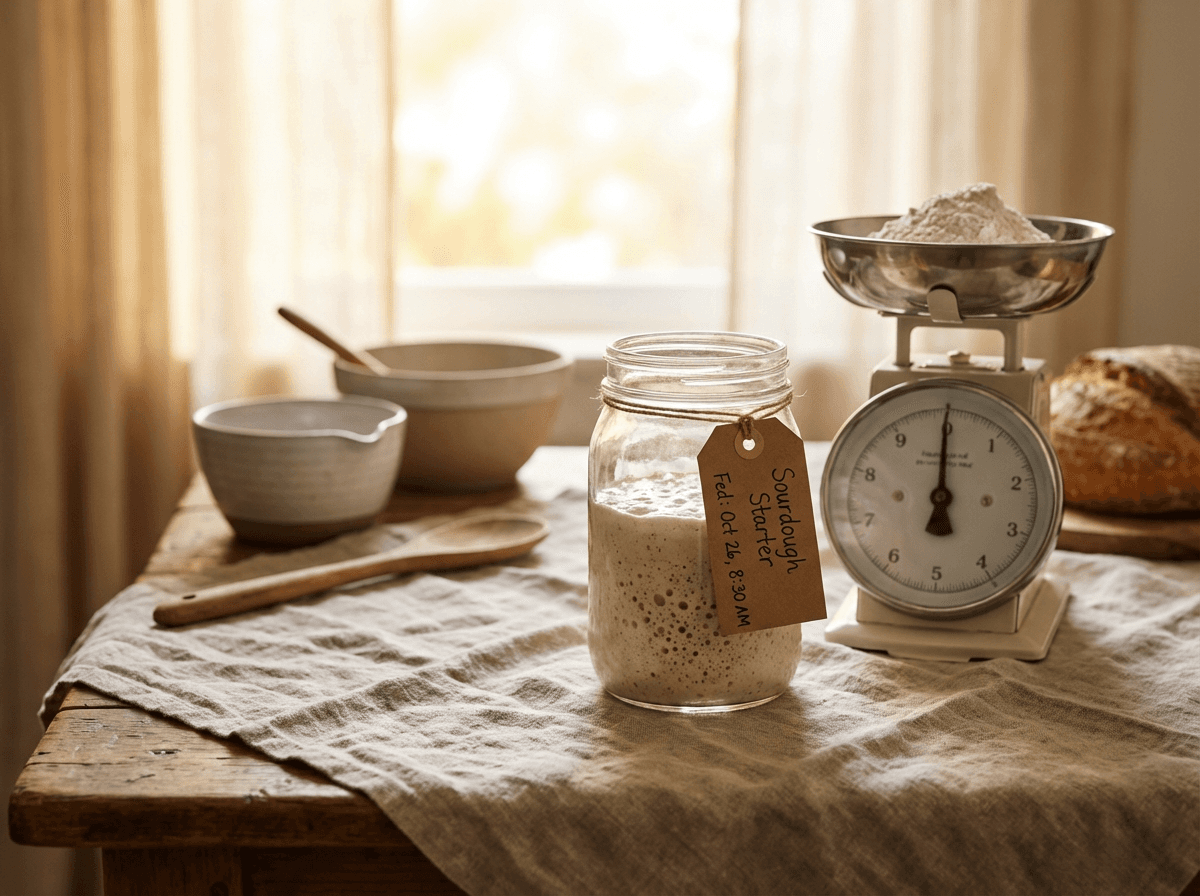
There's a whole cottage industry of complicated feeding schedules out there -- three feedings a day at specific ratios, temperature-controlled environments, the works. Most of that is overkill. The right schedule depends on one thing: how often you bake. Match your feeding rhythm to your baking rhythm and stop overthinking it.
Daily baking: the room temperature schedule
If you bake every day or every other day, keep your starter on the counter and feed it once every 24 hours. Use a 1:5:5 ratio (1 part starter, 5 parts flour, 5 parts water by weight). That's it.
Your starter will peak somewhere between 6 and 12 hours after feeding, depending on the temperature and how mature it is. In a warm kitchen (25C/77F), expect the faster end. In a cool kitchen (18C/64F), it'll take longer. Watch for bubbles and size increase rather than watching the clock.
When you're ready to bake, use the starter at or near its peak -- visibly bubbly, increased in size, smelling pleasantly sour. Then feed whatever's left over (or take a piece of your dough) as the seed for tomorrow's starter. You can adjust the ratio to control timing. Need your starter ready in 6 hours instead of 12? Use 1:5:5. Need it to hold for 18-24 hours? Go with 1:10:10 or even 1:20:20.
Weekly baking: the fridge schedule
If you bake once a week, daily feedings are a waste of flour and effort. After your bake day, take a bit of leftover starter (or a chunk of your dough), feed it at 1:5:5, and stick it straight into the fridge.
The cold slows fermentation to a near halt. Below 4C (40F), your microbes basically go to sleep. Your starter will sit happily in the fridge for 7-10 days without any attention. When bake day rolls around again, pull it out and feed it. One feeding is usually enough if your starter is mature and has been regularly maintained. If it's sluggish after the fridge, give it two feedings 12 hours apart before making your dough.
A smart trick for fridge storage: pour a thin layer of water over the top of your starter before refrigerating. This prevents the surface from drying out and acts as a barrier against mold. Stir it back in or pour it off when you're ready to use the starter.
Occasional baking: the long-term storage plan
Going on vacation? Taking a month off from baking? Don't stress about your starter dying -- it's almost impossible to kill.
For breaks of a few weeks, the fridge works fine. Your starter might develop a dark liquid on top (hooch) and smell pretty aggressive when you open it. That's normal. Pour off or stir in the hooch, feed at 1:10:10, wait 12 hours, feed again, and you're back in business.
For breaks longer than a month, dry your starter. Mix it with enough flour to make it crumbly, spread it on a sheet, and let it dry completely -- a dehydrator set to 30C (86F) speeds this up. Once bone dry, seal it in an airtight container. Dried starter can last for years. The microbes sporulate (form protective shells) and wait patiently for water and food. To reactivate, mix a bit of dried starter with fresh flour and water and feed daily until it's bubbling consistently. This usually takes 2-5 days.
Traveling with your starter
If you're heading somewhere for a week or two and want to bake there, you've got options. The easiest is to dry a small amount and bring it in a sealed bag. It weighs nothing and takes up no space.
If you don't want the reactivation delay, feed your starter right before you leave and put it in a sealed container in a cooler. It'll stay dormant for a day or two of travel. Once you arrive, feed it and let it come back to room temperature.
For long road trips, a jar of starter in a cooler with an ice pack works for several days. Just don't forget about it in a hot car -- heat accelerates fermentation and your jar could overflow or even pop its lid. Not a disaster for the starter, but definitely a disaster for your car.
When to feed before baking day
The timing of your last feeding before baking matters. You want your starter at or near peak activity when it goes into the dough. That's typically 6-12 hours after a feeding, but it varies.
Here's a practical approach. The night before you want to bake, feed your starter at a 1:5:5 ratio. By morning, it should be at or past its peak -- bubbly, risen, fragrant. Mix your dough first thing. If you prefer an evening bake, feed your starter in the morning.
If you miss the window and your starter has already collapsed, you have two options. Either feed it again and wait for the next peak (adding another 6-12 hours to your timeline), or just use it anyway but reduce the amount. If a recipe calls for 20% starter, drop to 10% or even 5% with an overripe starter. It'll regrow inside your dough -- your dough is just a big starter, after all. The fermentation will take longer, but the bread can be excellent.