
Sourdough Pizza Dough
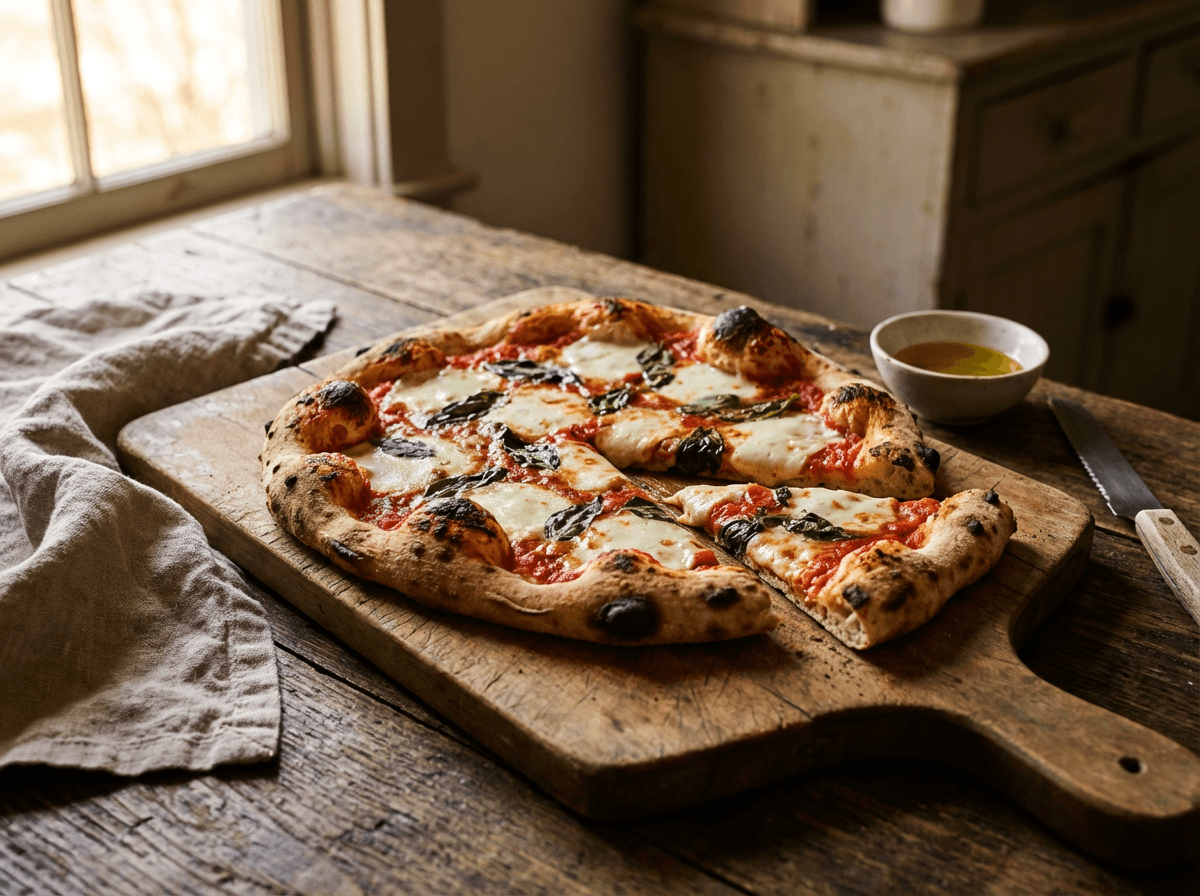
The secret to great pizza crust isn't technique -- it's time. This dough cold-ferments for 24-48 hours, developing the blistered, complex flavor you get at good pizzerias. The sourdough starter replaces commercial yeast entirely, and the difference is worth the wait.
Ingredients
- 500gbread flour(100%)-- "00" flour works great too
- 325gwater(65%)
- 50gactive sourdough starter(10%)-- fed 4-8 hours prior, at peak activity
- 12gsalt(2.4%)
- 15gextra virgin olive oil(3%)-- optional, makes the dough slightly more tender
Instructions
- 1
Combine the flour, water, starter, and salt in a large bowl. Mix until no dry flour remains. If using olive oil, add it now and mix until incorporated.
- 2
Knead the dough for 5-8 minutes on an unfloured surface until smooth and elastic. You should be able to stretch a small piece thin enough to see light through it.
- 3
Cover the bowl and let the dough rest at room temperature for 2 hours. It won't rise much -- that's fine. The long cold ferment does the real work.
- 4
Divide the dough into 4 equal pieces (about 225g each). Shape each piece into a tight ball by tucking the edges underneath and dragging it across an unfloured surface.
- 5
Place each ball in a lightly oiled container with a lid (or on an oiled sheet pan covered with plastic wrap). Refrigerate for 24-48 hours. The 48-hour mark is where the flavor really peaks.
Individual deli containers work perfectly for this. One ball per container.
- 6
Remove the dough balls from the fridge 1-2 hours before you want to bake. They need to come to room temperature so they stretch easily.
- 7
Preheat your oven as hot as it goes -- 260C+ (500F+) with a baking steel or stone on the middle rack for at least 45 minutes. If you have a pizza oven, even better.
- 8
On a well-floured surface, gently press and stretch each ball into a 30cm (12") round. Work from the center outward, letting gravity help. Don't use a rolling pin -- your hands preserve the gas bubbles that create those charred blisters. Top and bake for 5-8 minutes until the crust is blistered and the bottom is deeply browned.
If the dough keeps springing back, it needs more time at room temperature. Walk away for 15 minutes and try again.
Tips
A baking steel gets hotter and holds heat better than a stone. It's the single biggest upgrade you can make for home pizza.
The 10% starter ratio keeps fermentation slow, which is why a 48-hour cold ferment works without overproofing. Higher starter percentages would overferment in that time.
This dough also works for calzones and stromboli. Just increase the olive oil to 30g for a softer, more pliable crust.
If you only need 2 pizzas, freeze the other 2 dough balls after the first 24 hours. Thaw in the fridge overnight when you want them.