
Sourdough Bagels
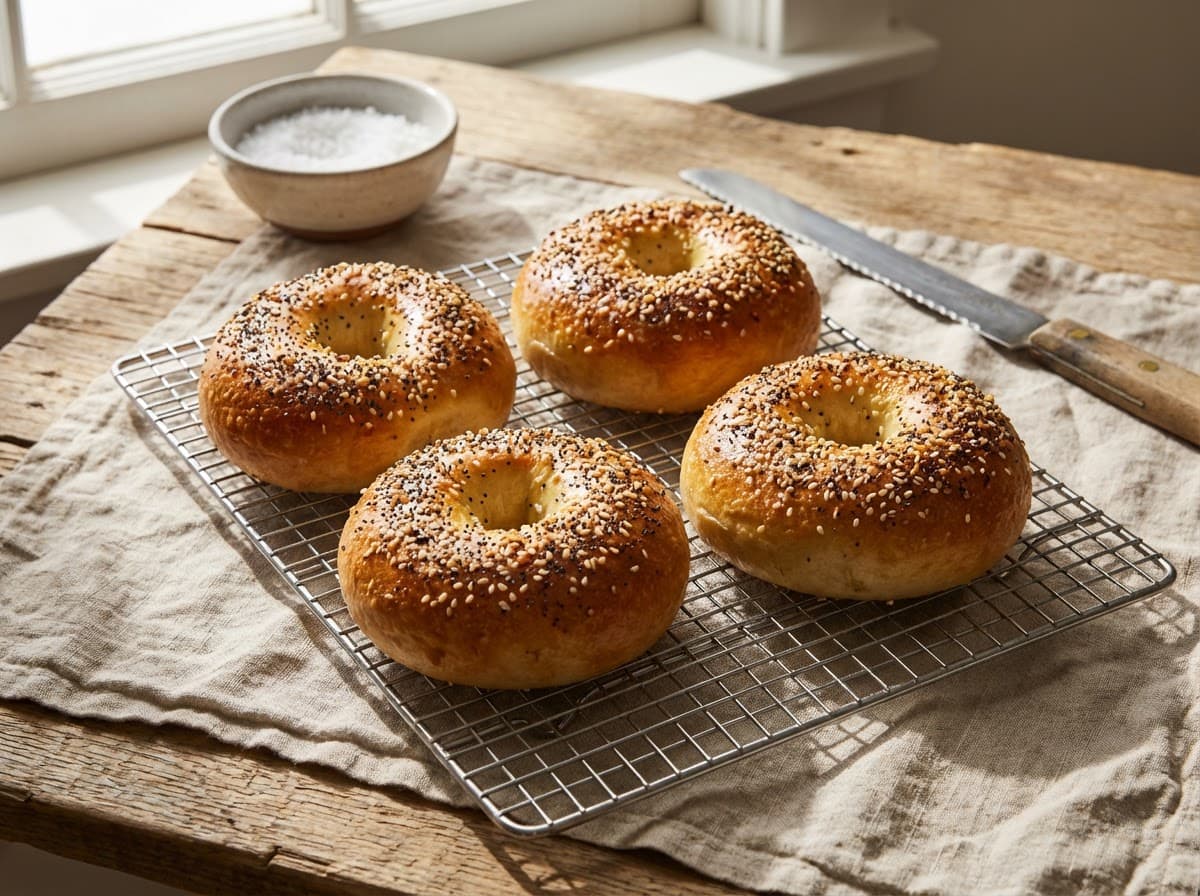
Sourdough bagels have the chew and malt flavor of a good New York bagel, but with a subtle tang that makes them something else entirely. The overnight cold ferment does the heavy lifting on flavor, and the boiling step is what separates a real bagel from a round roll.
Ingredients
- 500gbread flour(100%)-- high-gluten flour works even better if you can find it
- 325gwater(65%)
- 100gactive sourdough starter(20%)-- fed 4-8 hours prior, at peak activity
- 10gsalt(2%)
- 30ghoney or barley malt syrup(6%)-- for the dough
- 2 tablespoonshoney or barley malt syrup-- for the boiling water
- about 3 literswater for boiling
- as desiredsesame seeds, poppy seeds, everything seasoning, or coarse salt-- optional toppings
Instructions
- 1
Mix the flour, water, active starter, salt, and 30g honey in a large bowl until no dry flour remains. This dough is stiff -- that's intentional. Bagels need low hydration for their characteristic chew.
- 2
Knead the dough on an unfloured surface for 8-10 minutes. You're looking for a smooth, firm ball that passes the windowpane test. This dough takes more effort than a typical bread dough because it's so stiff.
If using a stand mixer, use the dough hook on medium-low for 6-8 minutes.
- 3
Cover the dough and let it rest for 30 minutes at room temperature. This gives the gluten time to relax before you shape.
- 4
Divide the dough into 8 equal pieces (about 120g each). Roll each piece into a ball by tucking the edges underneath and dragging it across an unfloured surface.
- 5
Shape each ball into a bagel. Poke your thumb through the center and stretch the hole to about 5cm wide -- it'll shrink during proofing and boiling. The hole should look too big. That's how you know it's right.
- 6
Place the shaped bagels on a parchment-lined baking sheet, leaving 5cm between each one. Cover loosely with plastic wrap.
- 7
Refrigerate the bagels for 12-16 hours. The cold ferment is where all the flavor develops. You can't rush this step and get the same result.
- 8
The next morning, preheat your oven to 220C (425F). Bring a large pot of water to a boil and add 2 tablespoons of honey or malt syrup.
- 9
Drop 2-3 bagels at a time into the boiling water. Boil for 45 seconds per side, then lift them out with a slotted spoon and return to the baking sheet. This step gelatinizes the surface starch and creates that distinctive shiny, chewy crust.
If a bagel sinks and doesn't float within a few seconds, your dough may be underfermented. Boil it anyway -- it'll still taste good.
- 10
Add toppings immediately after boiling, while the surface is still wet and sticky. Press seeds or seasoning firmly onto the bagels.
- 11
Bake for 20-25 minutes until deep golden brown. Rotate the pan halfway through for even color.
- 12
Cool on a wire rack for at least 15 minutes before slicing. A warm bagel is incredible, but cutting too early compresses the crumb.
Tips
Barley malt syrup gives a more authentic flavor than honey, both in the dough and the boiling water. Bob's Red Mill sells it at most grocery stores.
The dough should feel noticeably stiffer than regular bread dough. If it feels easy to knead, you probably added too much water.
Drop test: the morning after cold ferment, drop a bagel in a bowl of room-temperature water. If it floats within 10 seconds, it's ready to boil. If not, leave them at room temperature for 30-60 minutes.
These freeze beautifully. Slice before freezing so you can toast them directly from frozen.