
Sourdough Starter Not Rising? Here's What to Do
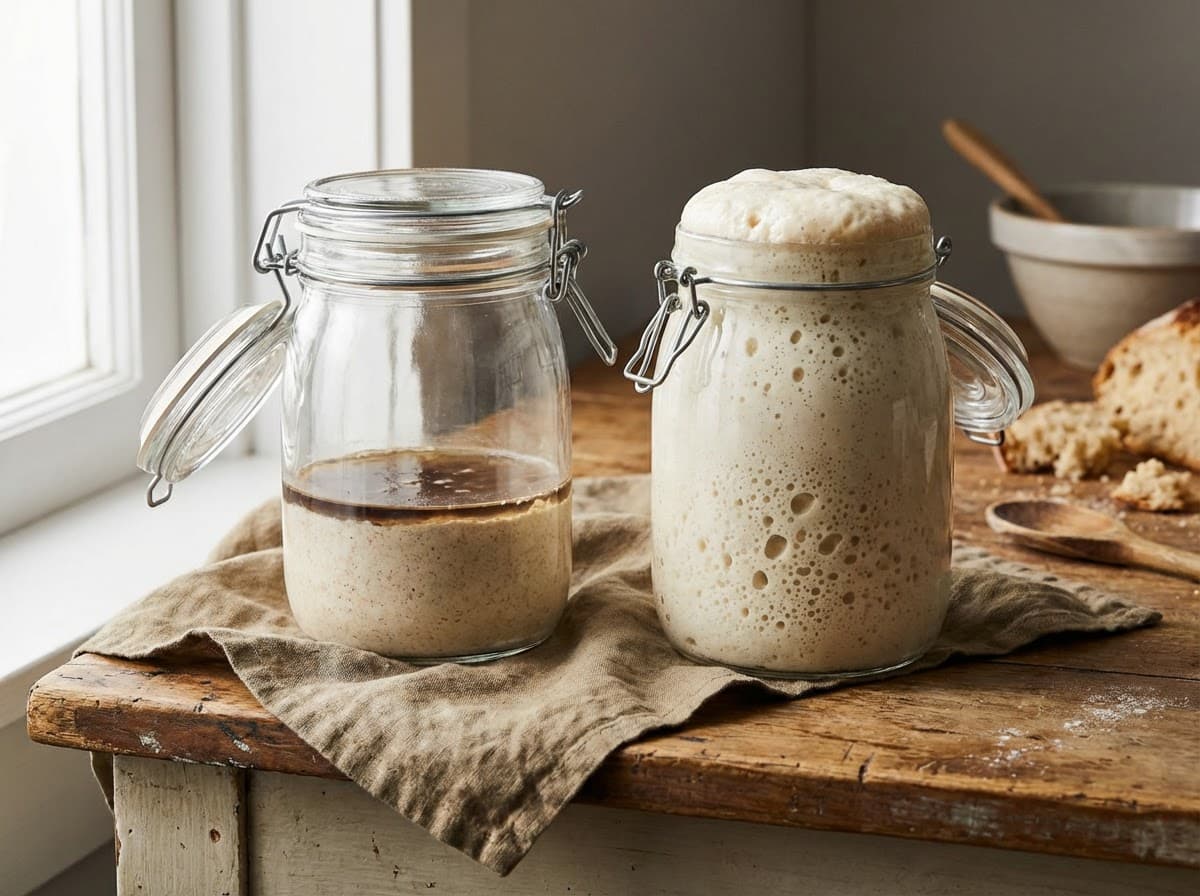
Your starter is sitting there like a lump, doing nothing. No bubbles. No rise. No sign of life. Before you throw it out and start over, work through these fixes. Most "dead" starters are just hungry, cold, or working with the wrong ingredients. The microbes are almost certainly alive -- they just need the right conditions to show it.
Check your water first
Chlorinated water is the number one killer of new starters. Municipal water treatment adds chlorine specifically to destroy microorganisms. If you're trying to grow a colony of microorganisms in chlorinated water, you can see the problem.
The fix is easy. Switch to filtered water, bottled spring water, or let your tap water sit in an open container for 12-24 hours. The chlorine evaporates. Some water systems use chloramine instead of chlorine, which doesn't evaporate as readily -- in that case, you'll need a charcoal filter or bottled water.
This one change alone has fixed countless "my starter won't work" posts across every sourdough forum on the internet. Try it before anything else.
Switch to whole grain flour
White flour -- especially bleached white flour -- carries far fewer wild yeast and bacteria than whole grain flour. The bran and germ of the grain are where most of the microbial life hangs out. When those layers get stripped away during milling, most of the microbes go with them.
For a new starter that won't rise, switch to whole wheat, whole rye, or whole spelt flour. Organic and unbleached is ideal. Some industrial flours are treated with fungicides during growing and processing, which can suppress microbial activity even further.
Once your starter is established and rising reliably, you can switch back to white flour for feedings. The microbes don't need whole grain forever -- they just need a strong initial population to get established. But for that bootstrap phase, give them the best possible starting conditions.
Fix your temperature
Yeast and bacteria are more active in warmer conditions. If your kitchen is below 18C (65F), fermentation crawls. Your starter might be rising, but so slowly that it peaks and collapses between your once-a-day checks.
The sweet spot for starter activity is 24-27C (75-80F). If your kitchen is cooler, find a warmer spot: on top of the fridge, near (not on) a radiator, inside your oven with just the light on, or in a microwave with a cup of hot water for ambient warmth.
You can also use warmer water for feedings. Water at 30-35C (86-95F) will raise the starter temperature and give the microbes a boost. Don't go above 40C (104F) or you'll start killing them.
The flip side: if your kitchen is very warm (30C+), your starter might be rising and falling so fast that you miss the peak entirely. Try checking every 4-6 hours instead of once a day. Use a rubber band on the jar to mark the starting level so you can see if any rise happened.
Fix your feeding ratio
If you're feeding at 1:1:1 (equal parts old starter, flour, water), switch to 1:5:5. The 1:1:1 ratio carries over too much old, acidic starter. High acidity suppresses yeast activity. With 1:5:5, you're giving the microbes a fresh environment with plenty of food and lower starting acidity.
For a starter that's been struggling, go even wider: 1:10:10 or 1:20:20. This dilutes the old starter's acidity dramatically, giving the yeast room to establish itself. Yes, it'll take longer to rise with less old starter, but the rise you do get will be more balanced.
Feed once every 24 hours at room temperature. Consistency matters during the establishment phase. Your microbes are adapting to a rhythm. Skipping a day when the starter is young resets their progress.
The day 2-3 rise that disappears
This confuses more people than any other starter issue. You mix flour and water on day 1. By day 2 or 3, you see dramatic activity -- bubbles, rising, the works. You think it's working. Then day 4 hits and... nothing. Flat. Dead-looking.
This is completely normal. That early rise isn't your sourdough microbes. It's other bacteria (like leuconostoc) that get activated first and produce a lot of gas. They're the weeds in your garden. Over the next few days, the flour-specialist microbes -- the ones you actually want -- gradually outcompete these early invaders.
The specialists start out in tiny numbers. They're growing with each feeding, but they haven't reached a visible population yet. By day 7-14, they'll be dominant and you'll see consistent, reliable rising.
So when the day 2-3 rise disappears, don't panic. Don't change anything. Just keep feeding at 1:5:5 once a day. The starter is working exactly as it should -- you just can't see it yet.
When to actually start over
Almost never. Starters are incredibly hard to kill. The microbes sporulate (form protective shells) when conditions get bad and reactivate when conditions improve. Even a starter that hasn't been fed for months can usually be revived with a few feedings.
The only time to start over: if you see actual mold in a new starter (fuzzy, colored spots -- not just discoloration or hooch), and the mold comes back after you try to rescue it with a clean sample and fresh feedings. Mold in a new starter means the bad microbes won the initial battle, and starting fresh with different flour is the simplest fix.
For an established starter that just seems sluggish, try 3-5 daily feedings at room temperature with a wide ratio (1:10:10) using whole grain flour. If it's not showing any signs of life after a week of this treatment, try one last thing: a stiff starter conversion. Mix your starter with flour at 50% hydration (50g water per 100g flour). The drier environment sometimes kicks yeast into gear when nothing else works.
But really, give it time. Two weeks of daily feeding is a reasonable trial period before considering starting over. Patience is the hardest ingredient in sourdough.