
Sourdough vs Yeast Bread: What's the Difference?
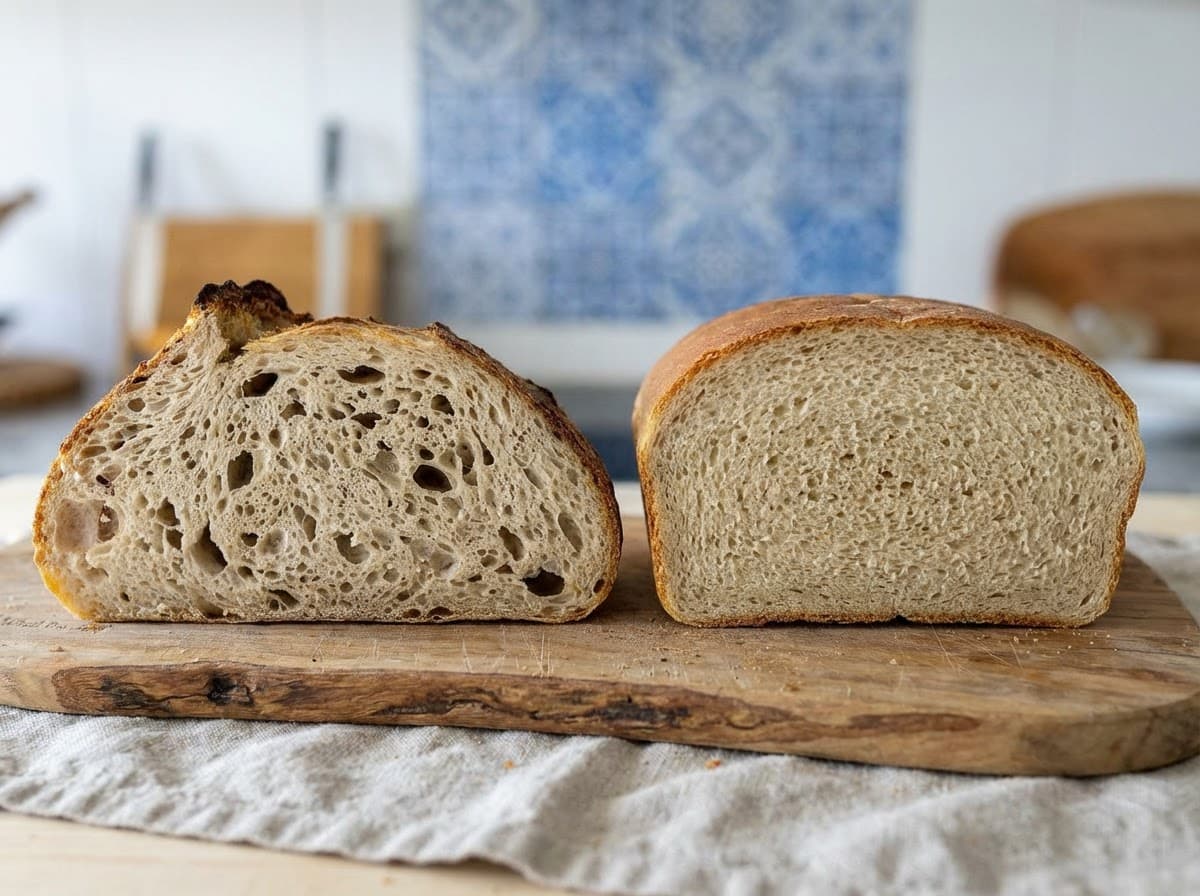
Both make bread rise. Both produce carbon dioxide. But sourdough and commercial yeast bread are fundamentally different processes that produce fundamentally different results. Here's what separates them.
How each one works
Commercial yeast bread uses a single, domesticated strain of *Saccharomyces cerevisiae*. You add it to flour, water, and salt, it eats sugar and produces CO2, and your bread rises. The whole process can take as little as 2-3 hours.
Sourdough uses a living culture that contains multiple species of wild yeast and lactic acid bacteria. These microorganisms were captured from the flour and the environment, and they've established a stable ecosystem inside your starter. When you add starter to dough, both the yeast and bacteria get to work -- the yeast leavening, the bacteria producing organic acids. This takes 8-24 hours.
The key difference isn't just speed. It's complexity. Commercial yeast does one thing well: produce gas fast. A sourdough culture does dozens of things slowly: leavening, acidifying, breaking down proteins, creating flavor compounds, and preserving the bread. The tradeoff is time.
Flavor: no contest
Commercial yeast bread tastes like... flour. Maybe a little sweet, a little wheaty. The yeast itself doesn't contribute much flavor beyond a subtle yeasty note.
Sourdough bread has tang, depth, and complexity. The lactic acid bacteria produce organic acids that give it sourness (ranging from mild and yogurty to sharp and vinegary, depending on your starter and process). The long fermentation allows amylase enzymes to convert starches into simple sugars, which caramelize during baking to create a darker, crunchier, more flavorful crust. The Maillard reaction (the chemical browning process) is more pronounced because there's more available sugar to react with.
There's a reason artisan bakers overwhelmingly prefer sourdough. The flavor isn't even in the same category. If you've only ever eaten commercial bread, your first slice of real sourdough is going to be a revelation.
Nutrition: sourdough wins on the details
The macronutrient profiles are similar. A slice of sourdough and a slice of yeasted bread made from the same flour have roughly the same calories, protein, carbs, and fat. The nutrition label won't look dramatically different.
But the details matter. Sourdough's long fermentation breaks down 50-80% of the phytic acid in the flour, making minerals like iron, zinc, and magnesium significantly more bioavailable. Commercial yeast bread, with its short fermentation, barely touches phytic acid levels.
Sourdough also has a lower glycemic index. The organic acids slow starch digestion and gastric emptying, resulting in a more gradual blood sugar response. Multiple studies confirm this -- you get the same calories, but your body processes them differently.
And then there's digestibility. The partial breakdown of gluten and reduction of FODMAPs during sourdough fermentation makes it easier on the gut. Many people who feel bloated after commercial bread do fine with sourdough.
Shelf life: sourdough lasts longer
A loaf of commercial white bread goes stale in 2-3 days without preservatives. (Most store-bought bread contains calcium propionate or other preservatives to extend this.)
A loaf of sourdough stays fresh for 5-7 days at room temperature, with zero additives. The organic acids produced by bacteria create a low-pH environment that inhibits mold and staling. Some lactic acid bacteria even produce antimicrobial compounds called bacteriocins that actively fight spoilage organisms.
This is one of the oldest and most practical advantages of sourdough. Before preservatives existed, sourdough's natural acidity was the only way to keep bread from spoiling quickly. It's still the best way.
Time investment: the elephant in the room
Here's where commercial yeast bread wins, and it's worth being honest about it. A basic yeasted loaf takes 2-3 hours from start to finish, with about 20 minutes of active work.
Sourdough takes 12-24 hours from start to finish, with 20-30 minutes of active work spread across that time. You also need to maintain a starter, which means regular feedings and at least a passing awareness of its health.
Most of the sourdough timeline is passive -- the dough is just sitting there fermenting while you do other things. Many bakers mix their dough in the evening, let it ferment overnight, and bake in the morning. Once you get the rhythm down, it fits into your life more easily than it sounds.
But if you need bread today, in the next two hours, commercial yeast is the right tool. Sourdough rewards patience. It punishes impatience.
Which one should you choose
If you're optimizing for speed and convenience: commercial yeast. It's faster, more predictable, and produces perfectly decent bread. There's no shame in it.
If you're optimizing for flavor, nutrition, and shelf life: sourdough. It's better in every measurable category except time.
If you're just getting started with bread baking: I'd actually recommend starting with yeasted bread to learn the basics of mixing, kneading, shaping, and baking. Then move to sourdough once you're comfortable with the fundamentals. Trying to learn sourdough and bread-baking simultaneously is like trying to learn stick shift and parallel parking at the same time.
And here's a secret: you can use both. Many bakers add a small amount of sourdough starter to yeasted doughs for flavor complexity, or use commercial yeast as a backup when their starter isn't at peak activity. They're not enemies. They're different tools.