
How to Store Sourdough Bread (So It Stays Fresh)
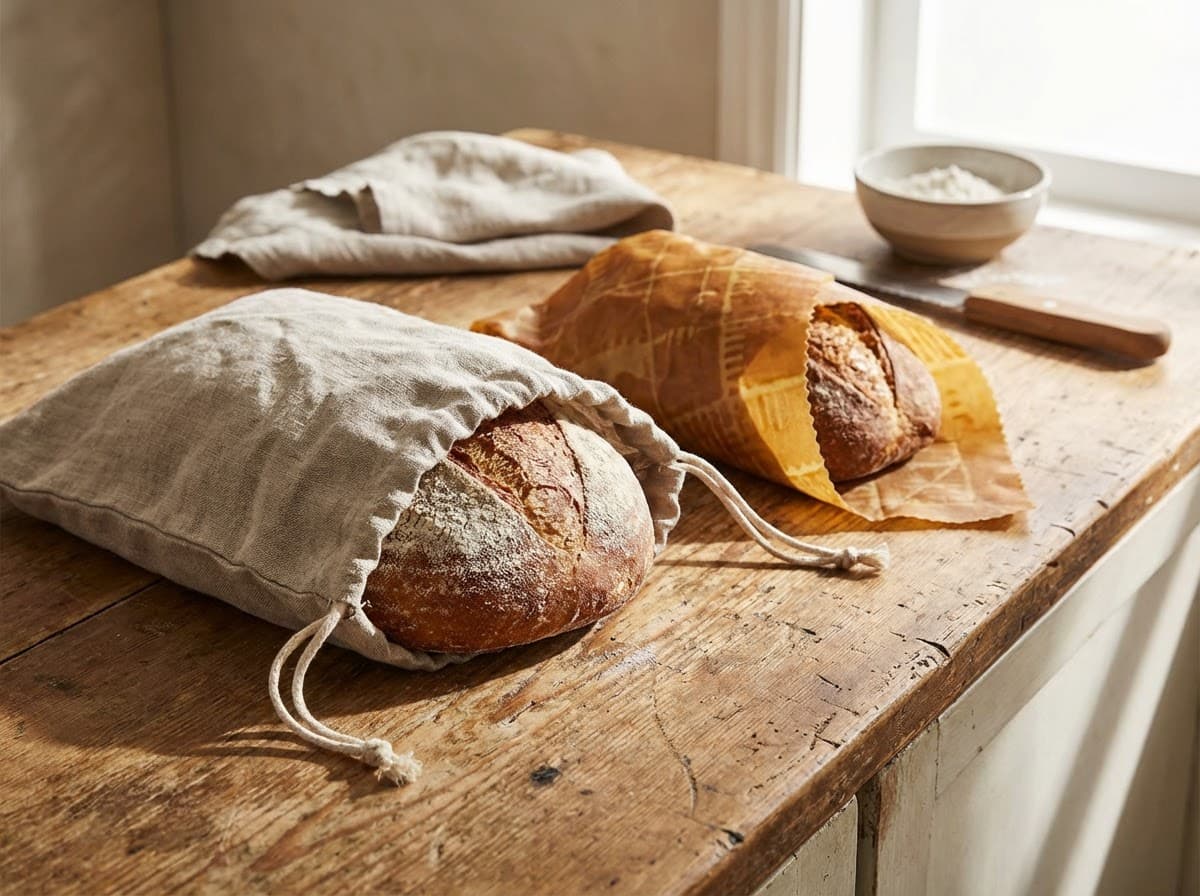
You spent 24 hours making this bread. Don't let bad storage ruin it in 24 hours. Sourdough actually stays fresh longer than commercial bread -- the acidity is a natural preservative -- but how you store it makes a huge difference in how long that crust stays crisp and that crumb stays soft.
Room temperature: best for day one
For the first day, store your bread cut-side down on a cutting board or plate. No bag, no container, no wrapping. Just leave it open.
This keeps the crust crisp. The exposed crumb at the cut faces the board, which slows moisture loss from the inside. The crust stays crunchy because it's not trapped in humid air.
The catch: the bread dries out fast this way. A low-hydration loaf (around 60% hydration) might get unpleasantly hard in 1-2 days. A higher-hydration loaf (75%+) lasts 3-4 days. After that first day, you'll want to switch to a container or bag if you're not going to finish it.
Sourdough lasts longer than regular bread at room temperature thanks to its acidity. That low pH is hostile to mold. A plain yeast bread might mold in 3 days; your sourdough could last a week before you see any spots. Still, don't push it.
Containers, bags, and bread boxes
Once you cut into the loaf and want it to last more than a day, move it to a container. Your options, from best to most convenient:
A bread box or paper bag: These allow some air exchange, so the bread dries out slowly but the crust retains some crispness. Good for 2-3 days.
A plastic bag or sealed container: Locks in moisture, so the crumb stays soft longer -- up to 5-7 days. The trade-off is that your crust will go soft. The moisture migrating from the crumb gets trapped and re-absorbed by the crust. If you toast each slice before eating, this doesn't matter at all.
The mold risk goes up with sealed containers. That warm, humid micro-environment is exactly what mold loves. Sourdough's acidity buys you time, but eventually mold wins. If you're not going to finish the loaf within a few days, consider freezing the rest.
Fridge storage: it works (with the right method)
Lots of bakers will tell you never to refrigerate bread because it dries out. They're half right -- bread in an open fridge will dry out fast. But bread in a sealed bag in the fridge works great.
A ziplock bag or sealed container in the fridge keeps the moisture locked in while the cold temperature prevents mold. Sourdough stored this way can stay good for weeks. Actual weeks. The crumb barely changes. The crust goes soft, but that's true of any storage method that traps moisture.
The key is always toasting your slices. Toast brings back crispness, warms the crumb, and reactivates some of those delicious Maillard flavors. Honestly, toasted day-five sourdough from the fridge is better than a lot of fresh bread from the store. This is my go-to method for everyday eating.
Freezing: the best long-term strategy
Freezing is the gold standard for long-term bread storage. It essentially pauses time for your bread.
Slice the entire loaf before freezing. Store the slices in portions -- however many you'd eat in a day -- in separate freezer bags or containers. This way you only thaw what you need.
To eat, pull a portion out in the morning and let it thaw for a couple of hours at room temperature. Then toast. Or just toast directly from frozen if you're impatient -- it takes a little longer but works fine.
Frozen sourdough stays good for months. There's even research suggesting that freezing and toasting bread makes the starch more resistant to digestion, potentially lowering your blood sugar response by up to 39%. So you might actually be doing your body a favor.
This is the best approach if you bake more than you can eat in a few days. Bake a big batch, eat fresh for a day, freeze the rest. You'll always have bread on hand.
Reviving stale bread
Your bread went hard. Don't throw it away.
Run the whole loaf (or a large chunk) under tap water for 10-15 seconds. Yes, directly under the tap. The stale starch in the crumb will absorb that water. Then bake it at 180C (350F) for 10-15 minutes. The loaf will come out almost as good as fresh -- crisp crust, soft crumb. It won't last long in this revived state (eat it that day), but it's a remarkable transformation.
This works because staling isn't just about moisture loss. It's about starch retrogradation -- the starch molecules crystallize as the bread cools and ages. Reheating with water reverses that crystallization temporarily. Science doing you a solid.