
The Best Flour for Sourdough (And Why It Matters)
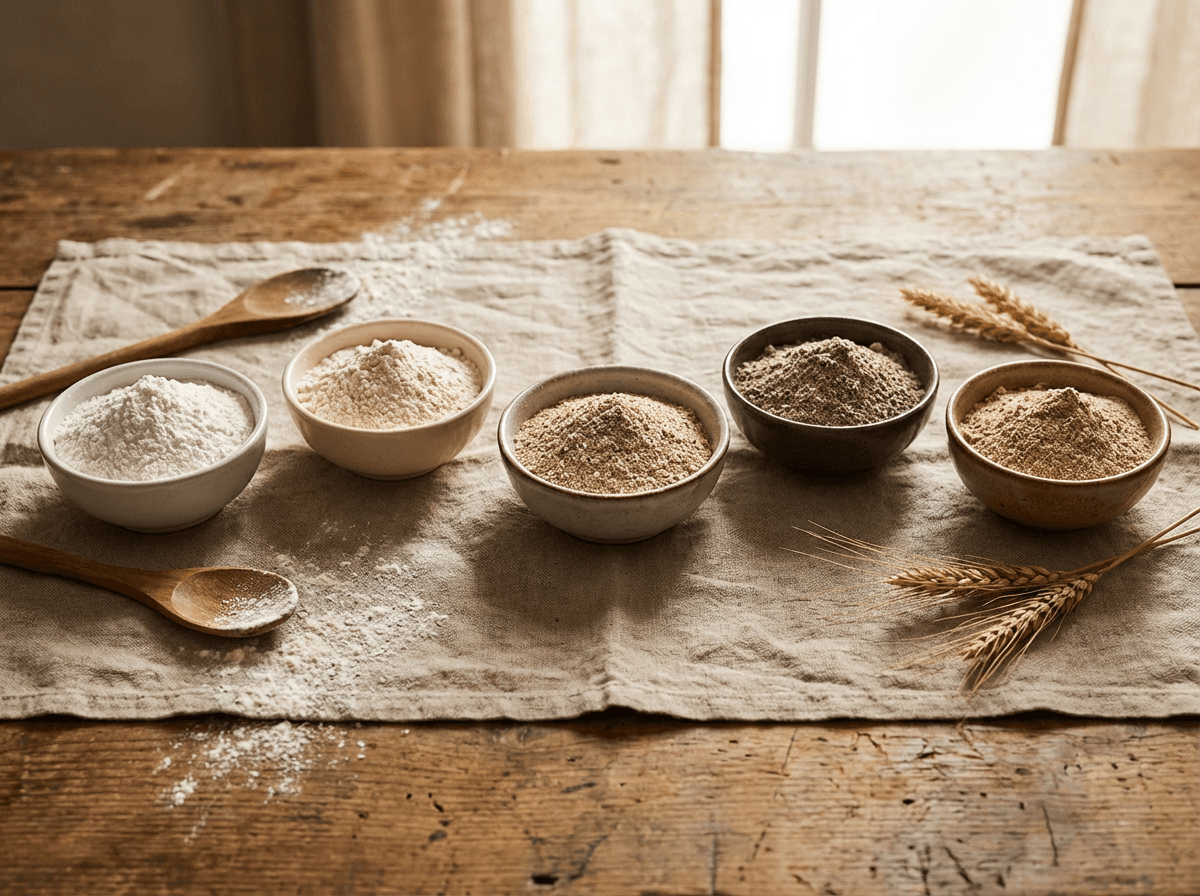
Flour is the foundation of your bread, and not all flour is created equal. The protein content, grain type, and how finely it's milled all affect how your dough handles, how long you can ferment, and what the final loaf looks and tastes like. Picking the right flour eliminates half the problems beginners struggle with.
Protein content: the number that matters most
Check the nutrition label on your flour bag. Find the protein percentage. This single number tells you more about how your bread will turn out than almost anything else.
About 80% of wheat flour protein is gluten. Gluten is what gives bread its structure -- it forms an elastic network that traps CO2 from fermentation. More protein means more gluten, which means your dough can ferment longer before it breaks down, hold more gas, and rise higher in the oven.
Here's a rough guide:
- 9-10% protein (cake flour): Too weak for freestanding sourdough. Okay for flatbreads or loaf pans. - 10-11% protein (all-purpose): Works for sourdough but you'll have a smaller fermentation window. Good for beginners who don't want to hunt for specialty flour. - 12-14% protein (bread flour): The sweet spot for sourdough. Enough gluten to handle long fermentation. This is what you should buy. - 14%+ protein (high-gluten flour): For bagels, very long fermentations, or extremely high-hydration doughs.
If your bread keeps coming out flat, check your flour's protein content before changing anything else. Switching from 10% to 13% protein flour can be the single biggest improvement you make.
Bread flour vs all-purpose
Bread flour has higher protein (typically 12-14%) compared to all-purpose (10-12%). For sourdough, bread flour is the clear winner.
All-purpose flour is designed to be average at everything -- cakes, cookies, bread, pancakes. It's a compromise. Bread flour is purpose-built for bread. The extra gluten gives you a stronger dough that handles better, ferments longer, and springs higher in the oven.
Can you make sourdough with all-purpose flour? Absolutely. But you'll need to compensate -- use less water (lower hydration), ferment for a shorter time, and accept a denser crumb. Many great sandwich loaves and flatbreads are made with AP flour. But if you're going for a freestanding loaf with good oven spring and an open crumb, reach for bread flour.
One annoying thing: "bread flour" means different things in different countries. In the US, it's reliably 12-14% protein. In Germany, the labeling system uses ash content (T405, T550, etc.) rather than protein, and "bread flour" can refer to different types. Always check the actual protein percentage on the package.
Whole wheat flour
Whole wheat flour uses the entire grain -- endosperm, bran, and germ. It's nutritionally superior, adds incredible flavor, and makes your kitchen smell amazing during fermentation. It also makes everything harder.
The bran in whole wheat flour absorbs a lot of water, which means you need higher hydration to get the same dough consistency. The bran particles also physically cut through gluten strands, weakening the network. And whole wheat has more enzymes (protease and amylase) that accelerate fermentation and gluten breakdown.
The fix: blend it. Use 20-30% whole wheat mixed with 70-80% bread flour. You get the flavor and nutrition benefits without the structural challenges. This is what most professional bakers do.
If you want to bake 100% whole wheat sourdough, look for strong whole wheat flour (high protein). Expect to use more water, ferment for less time (those extra enzymes work fast), and accept a denser, more compact crumb. A loaf pan helps enormously with 100% whole wheat -- don't fight it.
Rye flour
Rye is a completely different animal. It has proteins, but they don't form the same kind of elastic gluten network that wheat does. Compounds called pentosans interfere with gluten development. This means rye dough won't hold gas the same way wheat dough does.
Pure rye bread is always denser and flatter than wheat bread. That's just physics, not a skill issue. If you're making 100% rye, use a loaf pan and don't expect oven spring. The flavor, though, is incredible -- dark, earthy, tangy.
Rye flour also ferments fast. It has more natural enzymes and the bacteria love it. Watch your fermentation timing carefully with high-rye formulas.
For the best of both worlds, use 10-20% rye blended with bread flour. You'll get that beautiful rye flavor without losing the structure you need for a freestanding loaf. Rye is also excellent as the primary flour for your sourdough starter -- rye starters tend to be very vigorous and robust.
One more thing: rye starters almost never pass the float test. The dough can't trap gas well enough to float. Don't use the float test with rye. Look for bubbles and smell instead.
Spelt flour
Spelt is wheat's ancient cousin. It has gluten, but the gluten is more delicate than modern wheat's. Spelt dough comes together quickly, feels smooth, and handles beautifully -- right up until it doesn't. Over-knead or over-ferment a spelt dough and it falls apart fast.
Treat spelt like wheat flour with a shorter fuse. Reduce kneading time, watch your fermentation more carefully, and consider using a stiff starter to minimize bacterial gluten degradation. Hydration should typically be a bit lower than with wheat -- spelt flour absorbs water differently.
The flavor is worth the extra attention. Spelt has a nutty, slightly sweet taste that's distinctive and delicious. A 50/50 blend of spelt and bread flour makes an approachable loaf that's flavorful and manageable.
How to blend flours
Blending is where the real fun starts. You get to design your bread's flavor, texture, and handling properties by choosing what goes in.
The formula is simple: pick a base flour (bread flour for structure) and add smaller percentages of specialty flours for flavor and nutrition. Here are some proven blends:
- 80% bread flour + 20% whole wheat: The classic. Great flavor, great structure. - 70% bread flour + 20% whole wheat + 10% rye: Deeper flavor, still manageable. - 50% bread flour + 50% spelt: Nutty and smooth, shorter fermentation window. - 90% bread flour + 10% rye: Subtle rye flavor, handles like pure wheat.
When you add whole grain or rye flour, increase your water by a few percentage points to compensate for the extra absorption. And expect faster fermentation -- whole grains bring more enzymes to the party.
Keep notes on what you blend and how it turns out. After a few bakes, you'll have your own signature blend. That's one of the best parts of sourdough -- every baker's bread is genuinely unique because of the choices they make with flour.