
Sourdough Hydration Explained (With a Guide for Every Level)
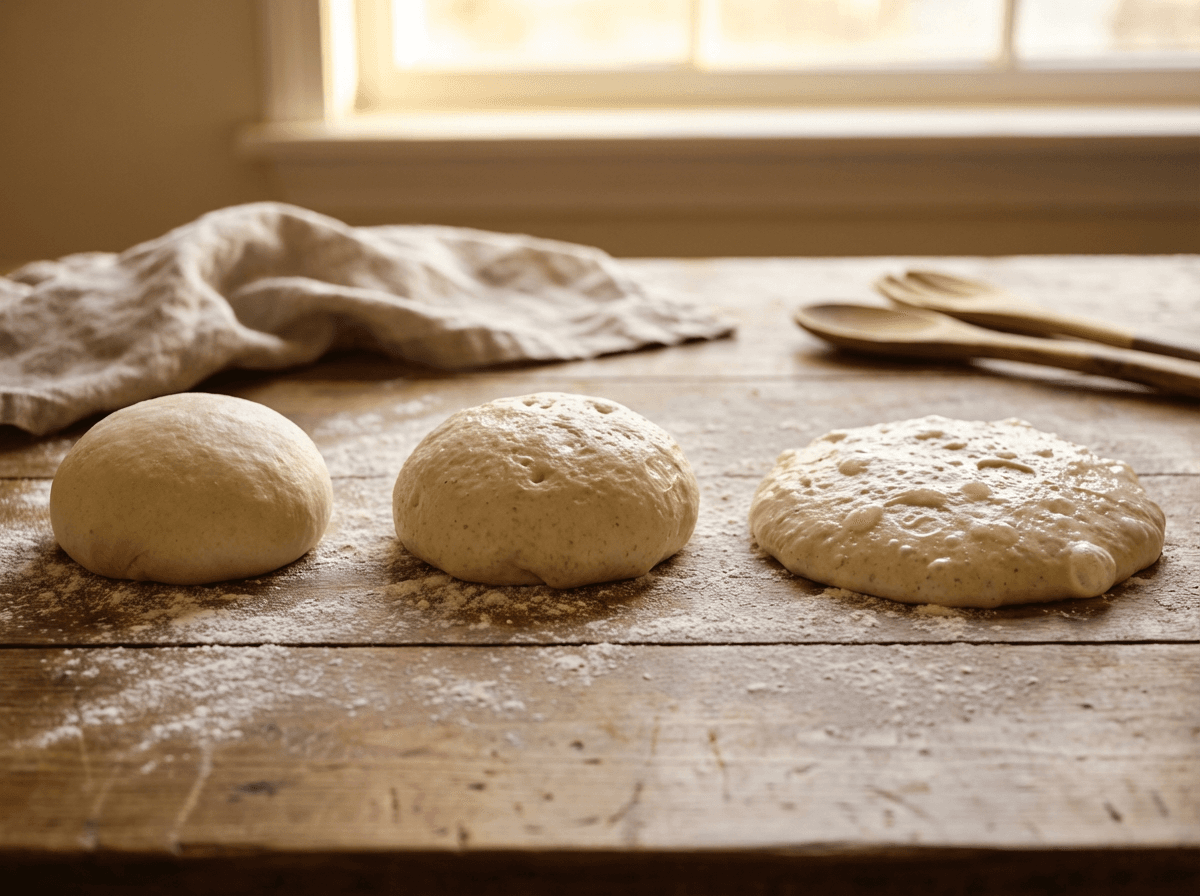
Hydration is just how much water is in your dough relative to flour. It's expressed as a percentage, and it affects everything -- how your dough handles, how open your crumb is, and how much of a wrestling match shaping will be. The internet treats high hydration like a badge of honor. Don't fall for it. The best hydration is the one that works for your flour.
What hydration means
Hydration is the weight of water divided by the weight of flour, expressed as a percentage. If you use 500g of flour and 350g of water, that's 70% hydration. Simple.
Why does this number matter? Because water changes everything about your dough's behavior. More water makes the dough more extensible (stretchy) and less elastic (springy). Think of a balloon vs. a car tire. A wet dough is the balloon -- easy for yeast to inflate, producing an open, airy crumb. A dry dough is the tire -- much harder to inflate, producing a tighter, denser crumb.
But there's a catch. That balloon is also harder to control. High-hydration dough sticks to everything, resists shaping, and punishes sloppy technique. Lower-hydration dough is more forgiving and easier to handle. The skill level required goes up with every percentage point of water you add.
Low hydration (55-65%): the forgiving range
This is where you should start. At 60% hydration, your dough is easy to handle, doesn't stick much, and shapes like a dream. It's great for bagels, pretzels, and rolls -- any bread where you want a tight, chewy crumb.
For freestanding sourdough loaves, 60% works perfectly well. The crumb won't be super open, but it'll be delicious and consistent. You can make bread, buns, pizza, and baguettes from the same dough at this hydration.
The big advantage: forgiveness. With less water, bacterial fermentation is slightly reduced, which means your gluten degrades slower. You have a bigger window before over-fermentation. The dough holds its shape during proofing and springs reliably in the oven.
If you're a beginner, stay here until you can consistently produce good loaves. Moving to higher hydration before you've mastered fermentation timing is a recipe for frustration.
Medium hydration (65-75%): the sweet spot
Most sourdough recipes you'll find online land somewhere in this range. It's the best balance between an open crumb and manageable dough for most bakers.
At 70% hydration, you get a noticeably more open crumb than at 60%. The dough is stickier but still shapeable with decent technique. Oven spring is typically excellent because the dough has enough extensibility for the gas to push it upward.
The key to working in this range is the bassinage method: start at lower hydration (60%), build your gluten network through kneading or autolyse, then gradually add the remaining water. Your flour absorbs the initial water and forms gluten bonds, which then become more extensible as you add more water. This is way easier than dumping all the water in at once and trying to wrestle a soupy mess into a dough.
Every flour has a different sweet spot in this range. The only way to find yours is to test. Make five small dough balls with the same flour at 55%, 60%, 65%, 70%, and 75% water. Wait 15 minutes, then stretch each one thin. The one that stretches into a smooth windowpane without tearing is your flour's upper limit. Stay below that.
High hydration (75%+): the challenge zone
High hydration is where Instagram sourdough lives -- those loaves with the ridiculously open, web-like crumb. It's impressive when it works. It's also the source of most sourdough frustration.
At 80%+ hydration, your dough is extremely wet and sticky. Kneading takes longer. You'll need multiple stretch and folds during bulk fermentation to build enough structure. Shaping is a fight -- the dough wants to spread, not hold shape. It'll stick to your banneton if you're not careful. And the window between perfectly proofed and overproofed gets very small because all that water accelerates bacterial activity.
High hydration is not inherently better. The crumb is more open, yes, but the texture can feel gummy to some people because of the retained moisture. And the difficulty level is genuinely higher. You need strong flour (13%+ protein), confident technique, and precise fermentation timing.
Here's a secret most bakers won't tell you: you can get a similar open crumb at lower hydration by fermenting longer. Slow fermentation with less starter achieves the same extensibility advantages that high hydration provides, because the protease enzyme gradually softens the gluten over time. Less water, less hassle, similar result.
How starter hydration factors in
Your sourdough starter is part of the dough, and it has its own hydration. If you're using a 100% hydration starter (equal parts flour and water), the water in that starter counts toward your total dough hydration.
Usually this doesn't matter much because you're using 5-20% starter by baker's math. But if you switch from a 100% hydration starter to a stiff 50% hydration starter, you're adding less water to the dough. Adjust your recipe water accordingly.
For a liquid starter (200%+ hydration), the opposite is true -- you're introducing a lot of water. Treat the liquid starter as mostly water when calculating your dough hydration. If a recipe calls for 600g of water and you're using 50g of liquid starter, you only need about 550g of additional water.
Honestly, for most home bakers using 10% starter at 100% hydration, the impact on total dough hydration is minimal. It's worth understanding but not worth stressing over.